Breast augmentation in Turkey costs a fraction of U.S. prices — but is it safe? Compare costs, credentials, implants, and what to look for in a clinic.
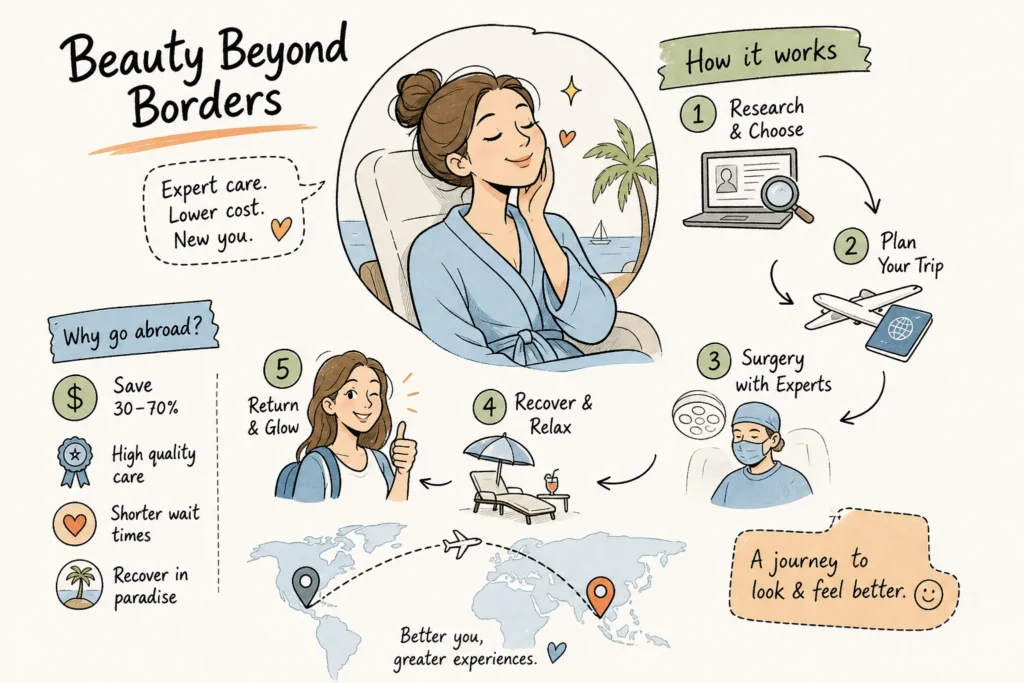
The cost difference stops most patients mid-research: breast augmentation in Turkey typically runs $3,200, $4,800 all-in, against $7,000, $15,000 for the same procedure in the United States. That gap is real and substantial, and it is not closing. But the question worth asking is not simply “how much?” It is whether the surgeon, the facility, and the aftercare once you fly home can match the standard you would expect domestically. This article walks through cost structures, hospital accreditation, surgeon credentials, implant safety data, and recovery logistics with one consistent benchmark: what the right clinic abroad actually looks like.
Practices such as that of Prof. Dr. Ufuk Bilkay in Izmir, where Emory University fellowship training sits alongside European academic credentials, demonstrate that credibility and value are not in conflict. The challenge for any patient researching medical tourism breast surgery is learning to distinguish those clinics from the ones that compete on price alone.
What breast augmentation in Turkey actually costs compared to the U.S.
Most advertised all-inclusive breast augmentation packages in Turkey fall between $3,200 and $4,200 in 2026, covering surgeon fees, anaesthesia, CE-marked implants from brands such as Mentor, Motiva, or Polytech, one night in hospital, five to seven nights in a four- or five-star hotel, airport transfers, post-operative medications, and remote aftercare for up to twelve months. Flights are almost never included, adding roughly $600, $1,200 from major cities, which brings a realistic total to approximately $4,000, $5,500. Premium packages with top-tier surgeons or luxury accommodation can reach $7,000.
The price gap between Turkey and the U.S. comes down to operating costs, currency differentials, and malpractice insurance structures, not any meaningful difference in surgical technique or implant quality. U.S. facility overheads, anaesthesiologist fees, and liability premiums account for a significant share of the domestic price, which averages $7,149 all-in nationally and can exceed $18,000 in high-cost cities. A patient comparing both markets should focus on what the package explicitly includes and which implant brands are specified, rather than treating a lower price as an automatic warning sign. Confirm in writing whether the quoted fee covers the exact brand of implant you have discussed, revision cover, and the aftercare schedule before committing.
What hospital accreditation actually tells you about safety during breast augmentation in Turkey
Joint Commission International accreditation is the clearest safety signal for a hospital abroad. JCI requires compliance with more than 1,100 measurable standards across infection control, surgical protocols, and patient rights, and it is directly equivalent to the Joint Commission standards applied domestically in the U.S. Several Istanbul hospitals hold this certification, including Memorial Şişli Hospital, Lokman Hekim Istanbul Hospital, Hisar Hospital Intercontinental, Medipol Mega, and Acibadem Healthcare Group. A published analysis of medical tourism patients found that JCI-accredited centres achieve a 1.2% complication rate for breast augmentation, compared with 2.6% at non-accredited facilities.
One statistic shapes the entire conversation: the British Association of Aesthetic Plastic Surgeons reports that 78% of corrective operations in the UK are performed to fix complications from procedures carried out in Turkey. That figure does not indict Turkey as a destination. It indicts the non-accredited, high-volume segment of the market that patients most commonly encounter via search. Searching for breast implants in Turkey will surface both JCI-accredited hospitals with strong safety records and clinics operating well below that standard. The only reliable way to distinguish them is accreditation status confirmed directly via the JCI registry, not via the clinic’s own website.
Surgeon credentials that actually cross borders
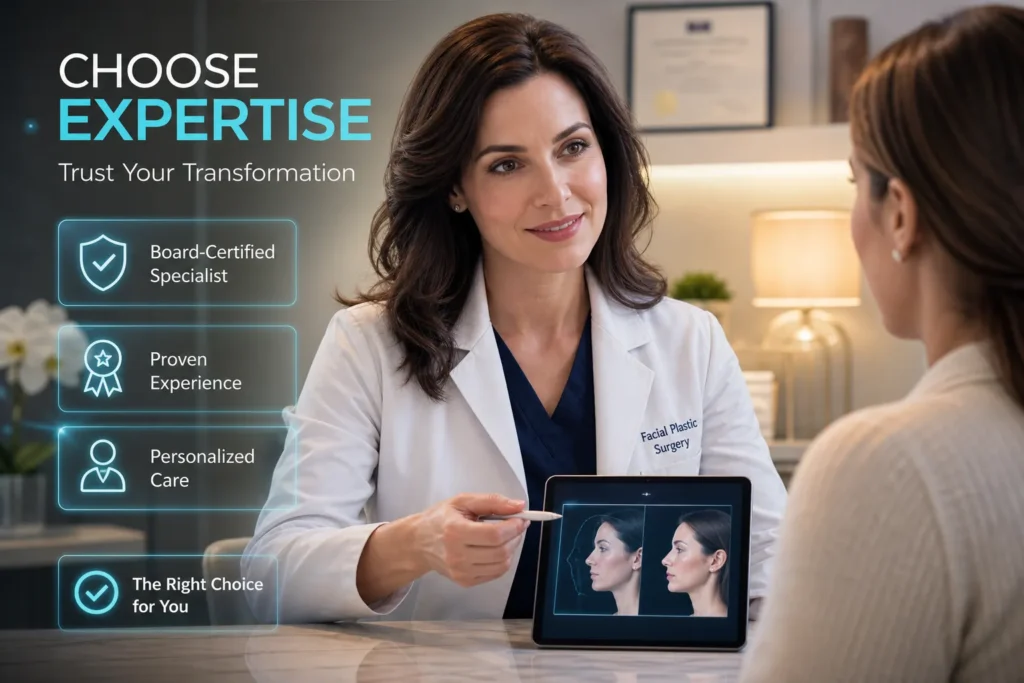
Every qualified plastic surgeon practising in Turkey holds the Turkish Board certification (TPRECD) as the mandatory national baseline. For international patients, the credentials that carry genuine cross-border recognition are EBOPRAS, the European Board of Plastic, Reconstructive and Aesthetic Surgery, ISAPS membership, and, for patients travelling from the U.S., a fellowship completed at a recognised American institution. EBOPRAS is the most rigorous European standard, requiring pan-European written and oral examinations that are more demanding than most national equivalents. A surgeon holding both EBOPRAS and ISAPS membership has been vetted across two separate continents.
For American patients in particular, a surgeon who has trained at a U.S. institution has worked inside the same system they are already familiar with. Prof. Dr. Ufuk Bilkay’s fellowship at Emory University, one of the United States’ leading academic medical centres, means his technique and clinical standards were shaped by U.S. surgical training, not merely influenced by it. This is a meaningfully different credential from a surgeon who has attended international conferences or completed short observerships abroad. It also means that when U.S. patients describe their aesthetic goals, there is no translation gap in understanding what natural-looking, proportionate results mean to an American sensibility. Combined with over 80 published scientific papers and more than 30,000 patients treated, that body of published work and clinical volume is an objective marker of sustained academic engagement, not a marketing claim.
Implant brands, types, and what the safety data shows
The dominant implant brands in accredited Turkish operating rooms are Motiva, Mentor, and Polytech, all carrying CE marking and extensive clinical safety records. Mentor holds the most comprehensive FDA-approved dataset, spanning more than thirty years, and Motiva received FDA Premarket Approval in September 2024, the first new silicone implant approved in the U.S. since 2013. The standard offering at quality clinics is a round, smooth, fifth-generation cohesive silicone gel implant. This choice is deliberate: smooth round implants carry a lower revision rate than anatomical options and avoid the BIA-ALCL risk associated with textured surfaces.
Rupture rates and capsular contracture
The ten-year rupture rate for Motiva and Mentor implants sits at 5.8, 9.5% for primary augmentation, translating to an annual rate below 1%. Capsular contracture rates are extremely low with Motiva’s SmoothSilk nanotexture and Polytech’s Microthane surface, both of which are specifically designed to reduce fibrous tissue response. Anatomical implants remain available for patients seeking a subtler, sloped result, but they cost €300, €500 more and require a textured surface that introduces rotation risk. Saline implants are not offered by major Turkish clinics. When reviewing any breast augmentation package in Turkey, confirm the specific brand included at the quoted price, as some clinics substitute lower-tier implants at entry-level price points without disclosure.
Recovery after breast augmentation in Turkey: timelines and managing follow-up at home
Most patients should plan for a seven-to-ten-day in-country stay. The immediate post-operative phase involves twenty-four to forty-eight hours of rest, with peak bruising and tightness in the first three days. By day five, most packages include a clinic check-up covering wound assessment and drain removal where applicable. Travel clearance must be given explicitly by the surgeon before booking a return flight; it cannot be assumed based on a generic timeline. Light desk work is typically possible by week two, and full exercise, including swimming and upper-body training, is cleared at six to eight weeks. The implants continue settling for three to six months, with 90% of the final shape visible by month three.
Reputable clinics providing medical tourism breast surgery will send patients home with a written aftercare plan: a remote follow-up schedule at one, three, and six months via video call or photo review, a named point of contact for clinical queries, and explicit guidance on which symptoms require immediate local emergency attention. Signs of infection, unexpected swelling, fever above 38°C, or significant asymmetry emerging in the first two weeks warrant a visit to a local emergency unit, not a wait-and-see approach. Before booking, ask the clinic directly who you contact if a complication arises at midnight three weeks after you land. A confident, specific answer to that question is itself a credibility signal.
Red flags, credibility signals, and what separates the right clinic from the rest
The medical tourism breast surgery market in Turkey is not a monolith. At one end sit high-volume, price-driven clinics that compete primarily on cost and convert patients at scale. At the other sit academically credentialed surgeons operating inside JCI-accredited hospitals, with full concierge patient journeys and structured aftercare protocols. The difference is not always visible in a before-and-after gallery. It shows up in the surgeon’s published research record, the facility’s accreditation status, and whether the surgical plan is tailored to your anatomy or templated to a standard package outcome.
When reading Turkey breast augmentation reviews online, patients frequently struggle to distinguish genuine clinical feedback from volume-driven marketing content. Look beyond star ratings: credible reviews reference the surgeon by name, describe the consultation process, and include specifics about aftercare. The colloquial term “boob job Turkey” dominates a significant share of search traffic in this category, much of it generated by lower-tier, high-volume providers who rely on social media reach rather than clinical credentials. Understanding where that traffic leads is as important as any single review.
The following serve as practical red flags when evaluating any breast augmentation abroad provider:
- Accreditation status that cannot be verified via the JCI registry directly
- Package pricing that does not specify the implant brand included
- No written aftercare plan or named post-operative contact for complications
- Surgeon credentials that rely solely on national Turkish board certification without EBOPRAS, ISAPS, or international fellowship training
- Pressure to book quickly or before a virtual consultation has taken place
Prof. Dr. Bilkay’s clinic in Izmir is built on the credibility-first model. The patient journey begins with a virtual consultation designed around the patient’s time zone, moves through full travel and logistics coordination, and continues with a structured post-operative follow-up plan after the patient returns home. For patients evaluating breast enlargement Turkey options, that model defines what a credibility-first provider looks like in practice, not the cheapest all-inclusive breast augmentation package available, but the level of care that makes the journey clinically sound.
The bottom line for patients considering breast augmentation in Turkey
Breast augmentation in Turkey is safe when the right decisions are made before booking, not after landing. The cost advantage is genuine and substantial. So is the risk that comes from choosing a clinic on price alone. JCI-accredited hospitals, surgeons with EBOPRAS or U.S. fellowship credentials, CE-marked cohesive gel implants from verified brands, and a written aftercare plan that covers complications after you return home are not optional extras. They are the baseline.
The patients who travel to Turkey for breast augmentation and return satisfied are not the ones who found the lowest advertised price. They are the ones who researched until they found a surgeon whose credentials they would have respected domestically, and whose clinic delivered the same standard abroad. That is the benchmark worth holding to, and it is one that the right clinic will meet without hesitation.
Book a Consultation
It’s easy and free!