Can revision surgery in Turkey fix a bad cosmetic result? Learn what credentials to demand, realistic costs, wait times, and how to find a qualified specialist.
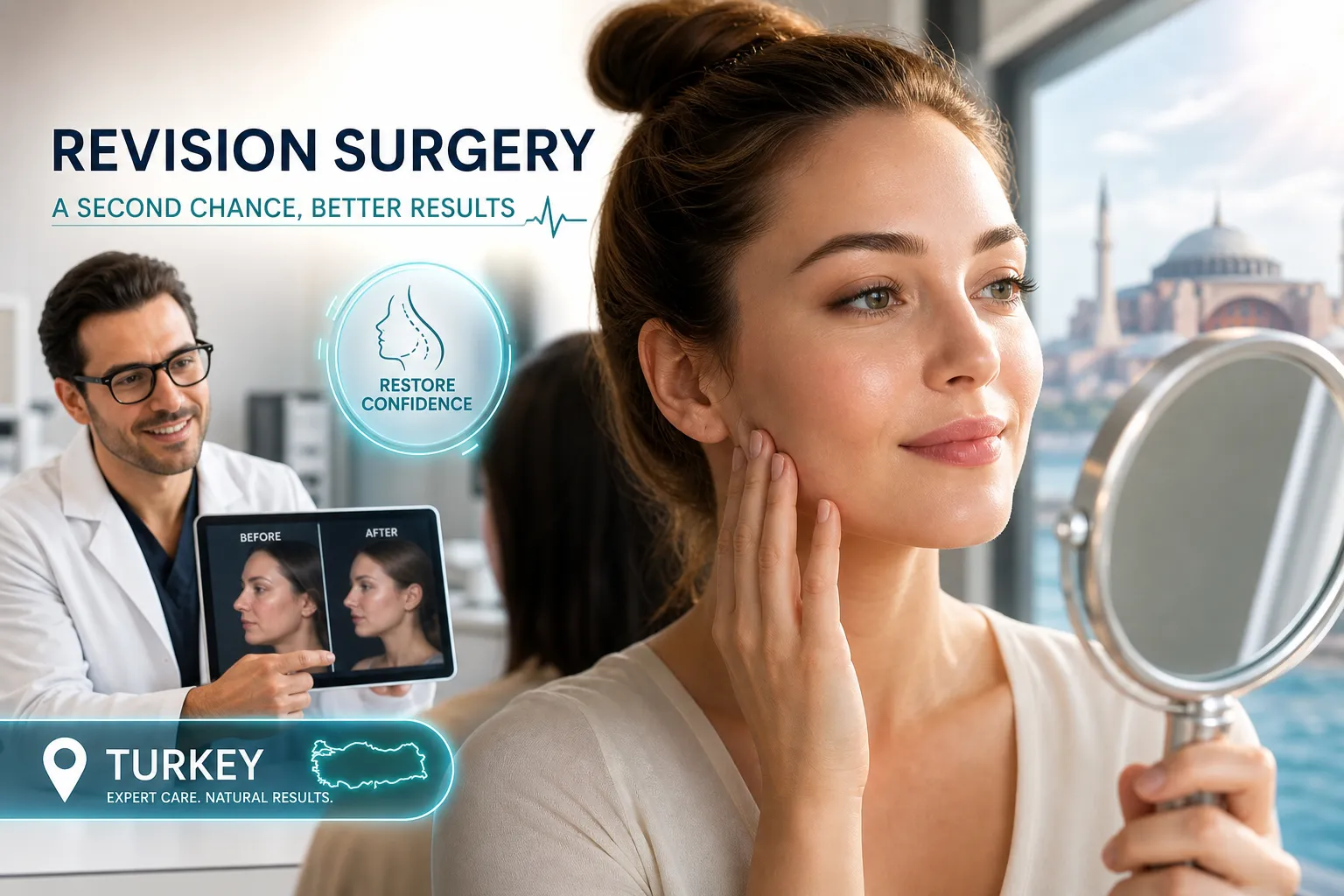
If you have had a cosmetic procedure and the result is not what you hoped for, you are not alone, and you deserve a straight answer about your options. The question many patients eventually ask is: can I get revision surgery in Turkey to fix a bad result? The honest answer is yes, but only under specific conditions. Turkey is both a leading source of the complications now being corrected by UK surgeons and home to a small number of genuinely exceptional revision specialists. Those two things are simultaneously true, which is precisely why a nuanced, evidence-based guide matters more than a simple yes or no.
Revision surgery is a fundamentally different clinical challenge from a primary procedure. Scar tissue changes the anatomy, blood supply is already compromised, and the margin for error is considerably narrower. The surgeon threshold rises sharply. If you are considering corrective surgery abroad, the question is not simply whether Turkey is a viable destination, it is whether you can identify the right category of surgeon within that market.
Defining a result that warrants revision
Many patients consider revision too early, before healing is complete. A rhinoplasty takes a full 12 months for the majority of swelling to resolve; a facelift result may look uneven for up to six months while deeper tissue settles. The distinction between a result still in progress and one that has genuinely failed matters clinically. A failed result means functional impairment (breathing obstruction, implant rupture, nerve involvement), structural deformity (saddle nose, visible implant edge, severe asymmetry), or a result that is clearly unchanged from the pre-operative state despite full healing time having elapsed.
The most common revision triggers across nose, face and breast procedures each carry different levels of surgical complexity. A slightly asymmetric nasal tip is a minor revision; a collapsed nasal vault requiring rib cartilage grafting is a major reconstructive undertaking. Post-facelift scarring or recurrent laxity and breast implant malposition represent distinct clinical problems requiring different surgical skill sets. Not all bad results are equal, and understanding where yours sits on that spectrum shapes everything that follows.
For revision rhinoplasty, the standard minimum wait is 12 months, with exceptions made only for urgent functional problems such as severe breathing obstruction. Complex cases involving thick skin or previous multiple surgeries often benefit from 18 to 24 months. For breast and facial revisions, a minimum of 6 to 12 months allows scar tissue to mature sufficiently. Operating on unresolved tissue risks compounding the original problem rather than correcting it.
Why revision surgery demands a different level of surgeon
Scar tissue distorts anatomical planes, reduces blood supply, and limits what can safely be moved or removed. In revision rhinoplasty, a surgeon may need to harvest cartilage from the ear or rib to rebuild structural support that was over-resected in the first procedure. This is not standard operating technique, it requires specialist training that most cosmetic surgeons, even competent ones, have simply never acquired.
Most cosmetic surgeons are trained primarily in primary procedures. Revision rhinoplasty, secondary rhytidectomy, and breast implant revision all carry higher complication profiles and demand expertise found only in a narrower subset of the surgical market. The surgeon you need for a revision is not necessarily the same category of surgeon who could competently have performed your original procedure. Academic surgeons with published experience in reconstructive and revision work represent a small fraction of the overall market. Identifying them requires specific credential checks rather than a Google search ranked by advertising spend.
This matters practically. Searching broadly for cosmetic surgeons in Turkey will return hundreds of results, the majority of which are appropriate for primary procedures only. Filtering for surgeons with documented revision case experience, academic publishing history, and fellowship or specialist training is a materially different exercise, and that distinction separates a safe choice from a repeat of the original mistake.
Turkey’s revision track record: what the data shows
The British Association of Aesthetic Plastic Surgeons (BAAPS) reports that 78% of corrective operations performed by UK surgeons are fixing complications from procedures originally undertaken in Turkey. Since 2019, 25 British nationals have died following plastic surgery in Turkey, with six fatalities recorded in 2023 alone, figures drawn from BAAPS reporting through to 2024. A 2025 audit at a major London teaching hospital found that 73% of patients presenting with surgical complications had their original procedures performed in Turkey. These figures reflect the aggregate reality of a medical tourism market where volume clinics dominate search results and price is the primary differentiator.
This is not an argument against Turkey as a destination. It is an argument against choosing a surgeon on price alone. Turkey’s cosmetic surgery market is not homogenous. Reputable, academically credentialed surgeons in cities like Istanbul and Izmir report high success rates for complex revision procedures, and these figures are credible when referencing specialists with formal board certification, proper hospital affiliations, and a case volume that includes demanding revision work. The difficulty is that these surgeons represent a small fraction of the market. Many medical tourism packages route patients toward high-throughput clinics where revision expertise is limited and follow-up care is minimal.
Surgeons such as Prof. Dr. Ufuk Bilkay of Izmir, board-certified, with over 30 years of surgical experience, more than 80 published academic contributions, and fellowship training at Emory University, represent the credentialling standard patients should apply when evaluating whether to pursue revision surgery in Turkey. For anyone seeking corrective plastic surgery in Turkey, the same market that produced the original complication deserves significantly more rigorous vetting the second time around.
The credentials that separate a safe choice from a risky one
Any Turkish plastic surgeon being considered for revision work should hold membership in TSPRAS, the Turkish Society of Plastic, Reconstructive and Aesthetic Surgeons, verifiable directly through the society’s searchable member directory at plastikcerrahi.org.tr. Turkish board certification in Plastic, Reconstructive and Aesthetic Surgery should be confirmed by requesting the physical certificate, including the issuing body, certificate number, and date. EBOPRAS membership (European Board of Plastic Reconstructive and Aesthetic Surgery) adds a further layer of standardised credentialling for internationally minded patients.
Fellowship training at an internationally recognised institution is a particularly strong signal for patients from the UK or United States. Prof. Dr. Bilkay’s fellowship at Emory University in Atlanta is precisely the kind of American-standard training that gives international patients confidence in Western-recognised technique and clinical rigour, a level of credential that narrows the field considerably and warrants direct verification.
The procedure must be performed in a fully recognised hospital, not an outpatient aesthetic clinic. JCI (Joint Commission International) accreditation is the gold standard. The facility should have a minimum of 30 beds, a licensed operating theatre, 24/7 nursing, and documented emergency escalation protocols. Any clinic that does not disclose its facility accreditation status when asked directly should be removed from consideration immediately. Any surgeon who cannot provide before-and-after documentation of revision cases, who does not require an appropriate post-primary waiting period, or who cannot offer a written aftercare plan with 12 months of follow-up is not an appropriate choice for revision work.
Waiting periods by procedure type
For revision rhinoplasty, the standard minimum is 12 months, with most consensus guidance recommending 18 to 24 months for complex cases. For facial and breast revisions, 6 to 12 months is the broadly accepted clinical minimum, though individual assessment by the operating surgeon remains essential. Any reputable revision specialist will decline to proceed until tissue has sufficiently matured.
Realistic cost and timeline expectations
For revision rhinoplasty in Turkey, all-inclusive packages, covering surgery, hospital stay, 5 to 7 nights’ accommodation, transfers and aftercare coordination, typically range from £2,750 to £6,700 depending on complexity. Cases requiring cartilage grafting from the ear or rib sit at the higher end of that range. For comparison, equivalent revision rhinoplasty in the UK carries a surgeon’s fee alone of £7,000 to £12,000. Revision breast implant surgery in Turkey averages £3,200 to £5,200 all-inclusive for standard cases, rising to £5,500 or more where capsular contracture or significant scar tissue removal is involved.
Revision facelift pricing varies considerably based on the extent of the primary procedure and the scope of repair required; direct consultation is necessary for an accurate figure. International flights are not included in Turkish packages and should be budgeted separately. These price ranges are indicative and based on clinic pricing data current at the time of writing; exchange rate fluctuations will affect the precise sterling equivalent.
Patients who have had a primary procedure less than 12 months ago should use the intervening period productively, researching surgeons, arranging a virtual consultation, and gathering medical records and post-operative documentation. Arriving at a revision consultation with full documentation, including surgical notes, consent forms, post-operative photographs, and a written summary from a UK GP or specialist, significantly improves the quality of the surgical assessment. Preparation during the wait period is not wasted time; it is a clinical requirement.
How to take the next step without repeating the same mistake
The single most protective step a revision patient can take is to arrange a detailed virtual consultation with a board-certified surgeon before committing to travel. This allows you to present your documentation, receive an honest surgical assessment, understand what correction is and is not achievable, and evaluate whether the surgeon asks the right questions. A surgeon who provides a confident quote and treatment plan in a 15-minute call without reviewing your original surgical records is not the right choice.
Any board-certified revision specialist of the calibre described in this guide should offer a virtual consultation before any travel commitment is made, verify that your chosen surgeon provides this as standard. For someone who has already had a poor outcome, this no-commitment first step is a rational way to assess whether revision surgery in Turkey makes clinical and logistical sense before any financial commitment is made. Prof. Dr. Ufuk Bilkay’s clinic offers this service as standard for international patients evaluating corrective options.
British patients treated in Turkey retain full legal rights under Turkish law, with the same standing as Turkish citizens. You can pursue compensation through Turkish civil courts for economic losses, pain and suffering, and the cost of corrective treatment in the UK. The statute of limitations is two years from the point you became aware of the harm. Retain all medical records, consent forms, receipts, and before-and-after photographs to protect any future claim. The NHS will not fund corrective aesthetic surgery but will treat urgent complications such as infections or wound breakdown. UK-based legal firms with Turkish-qualified lawyers can pursue claims without requiring you to travel for proceedings.
The short answer to whether revision surgery in Turkey can fix a bad result
It can, when the surgeon holds verifiable academic credentials, operates in an accredited hospital, has documented revision case experience, and provides a structured post-operative follow-up plan. The market conditions that produced the UK’s burden of corrective work from Turkish complications remain real. Avoiding that pattern the second time requires rigorous vetting, not avoidance of the destination. Begin with a virtual consultation, bring your full documentation, and ask specific questions about revision complexity before any financial commitment is made.
Book a Consultation
It’s easy and free!