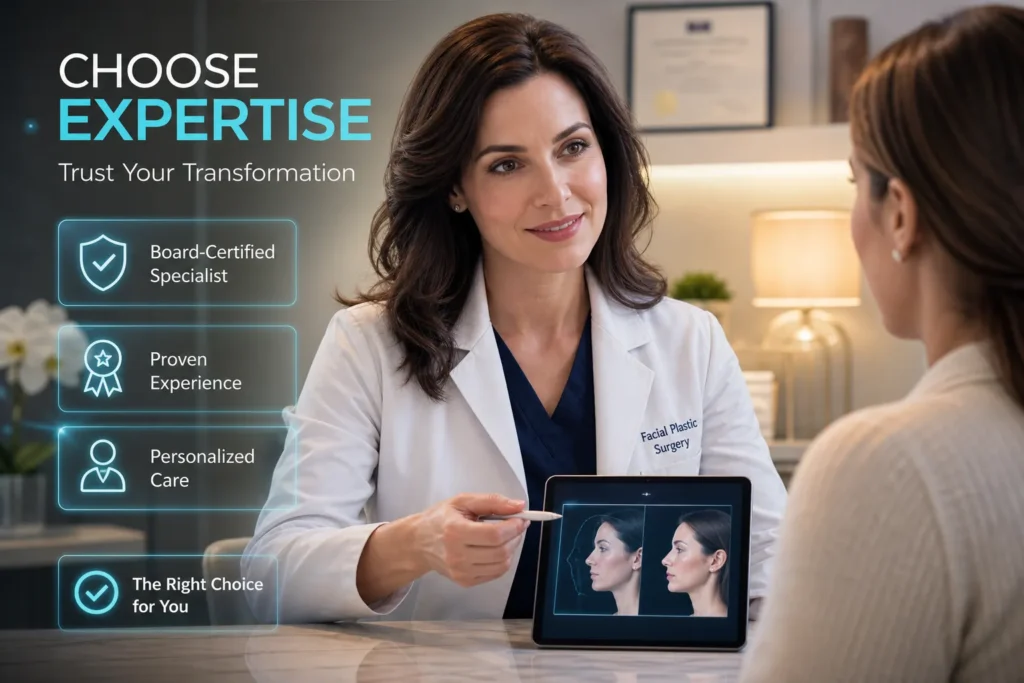
Find out how Turkish clinics manage every stage of the international patient journey, from virtual consultations to post-op follow-up back home. Plan your trip confidently.
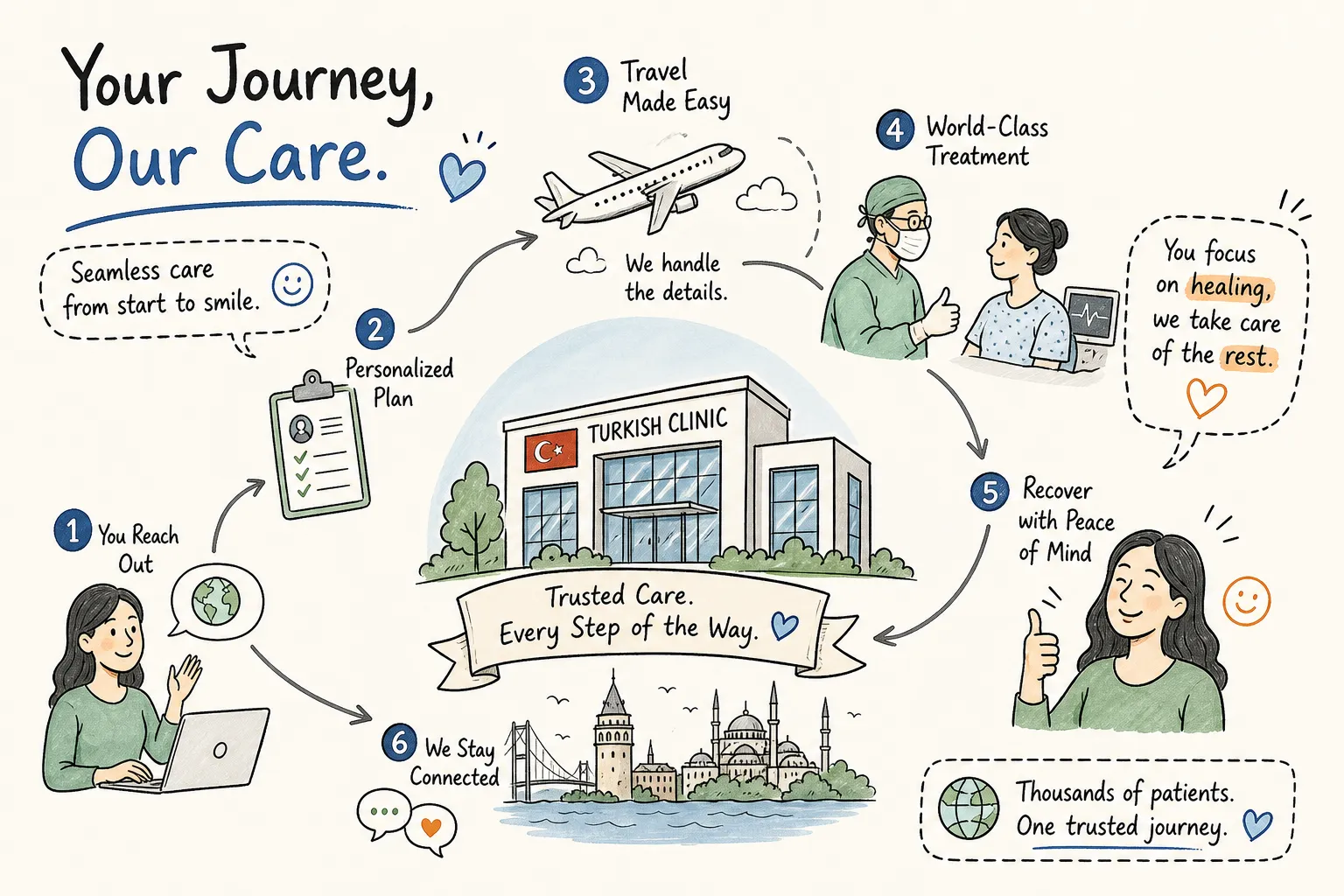
Many patients report that the anxiety surrounding medical travel is not about the surgery itself, it is the logistical questions that cluster around it. Who books the transfers? Who translates the consent forms? Who sends your post-operative instructions to your GP back home? Those logistics can feel more daunting than the procedure, particularly when navigating an unfamiliar healthcare system on the other side of the world.
So how do clinics in Turkey manage the full patient journey for international visitors? The most credentialed Turkish plastic surgery clinics have engineered a complete answer to every one of those questions. Practices like Prof. Dr. Ufuk Bilkay’s in Izmir have developed a structured, seven-stage patient pathway specifically designed for overseas patients, where each stage connects seamlessly to the next. This walkthrough maps that journey so you can evaluate any clinic against a clear, consistent standard before you commit to anything.
From enquiry to treatment plan: the pre-travel consultation stage
The international patient journey begins remotely, and the quality of this first stage tells you a great deal about what follows. Reputable clinics open the process through a structured online enquiry: you submit photographs of the treatment area in controlled natural lighting, a completed medical history form, and any relevant prior imaging or test results. Within 24 to 48 hours, clinics operating to a professional standard return a preliminary assessment and schedule a virtual consultation.
That consultation should take place via encrypted video call and, ideally, be conducted by the operating surgeon rather than routed solely through a non-medical coordinator. Some clinics use a qualified medical coordinator for initial triage, but the clinical assessment itself should involve the surgeon directly. Only the surgeon can evaluate anatomical factors, identify contraindications from your medical history, and provide realistic outcome expectations. A surgeon who declines or modifies a request based on clinical suitability is demonstrating professional rigour, not poor service. For cosmetic procedures, three-dimensional simulations may be provided at this stage to ground the conversation in achievable results.
The personalised treatment plan and cost estimate
Following the virtual consultation, you should receive a thorough treatment plan document before any financial commitment is requested. A genuine personalised plan specifies the procedure type and surgical approach, estimated duration and hospital stay, a recovery timeline, pre-operative preparation instructions, and a fully itemised cost breakdown. What arrives as a generic price sheet with no clinical detail is not a treatment plan, the two serve distinct purposes, and accepting the latter as the former is one of the most common mistakes first-time medical travellers make.
Documents to prepare before the consultation
Before your virtual consultation, gather the following: frontal and lateral photographs of the treatment area in natural light, a concise summary of your relevant medical history, a complete list of current medications, prior surgical records if applicable, and any imaging from a previous procedure if you are seeking revision surgery. Arriving prepared shortens the evaluation timeline and signals to the clinic that you are a serious, well-organised candidate.
How clinics in Turkey manage the international patient journey before you land
Once you confirm your treatment plan, the coordination work that separates a concierge-level practice from a basic surgical facility becomes visible. A top Turkish clinic assigns a single dedicated international patient coordinator who manages your pre-travel window through direct messaging in your language. This person handles visa invitation letter issuance, hotel or serviced apartment booking at preferential contracted rates, VIP airport transfer scheduling, and a pre-travel medical briefing covering dietary restrictions, medications to pause, and what to pack for your recovery stay.
Visa support, accommodation, and ground transfers
Turkey’s e-Visa system simplifies entry for most Western nationalities, but clinics issue formal invitation letters for patients who require additional documentation. Accommodation is typically arranged at four or five-star hotels contracted to the clinic and positioned close to the surgical facility, which has practical benefits during the early recovery period. Airport transfers are private and timed precisely to your arrival, a small detail that removes considerable stress when you are navigating an unfamiliar city at the end of a long-haul flight. For UK patients accustomed to NHS pathways, the level of hands-on logistical co-ordination available from Turkish international patient departments can be a marked contrast to what home-country referral processes typically provide.
Pre-travel instructions and what the coordinator sends you
Before you travel, expect a written pre-operative guide from the clinic covering fasting requirements, alcohol and smoking restrictions, medications to discontinue, what to wear on the day of surgery, and a day-by-day schedule for your entire stay. The best clinics include a direct point-of-contact number available outside standard office hours for last-minute questions. This document is your operational blueprint for the trip, and its level of detail is a reliable proxy for the clinic’s overall standard of care.
Arrival, pre-operative assessments, and in-clinic care
Your in-person phase begins at the airport and proceeds through a structured admission process at the clinic’s international patient desk: priority check-in, identity and documentation verification, and a formal introduction to your coordinator. What follows is the mandatory pre-operative clinical clearance conducted on arrival or the day before surgery. This is distinct from the remote suitability assessment; it is a clinical standard required before any surgical procedure in Turkey.
The pre-operative clinical clearance process
Standard pre-operative assessments include a full blood panel, ECG, chest X-ray where indicated, and an in-person consultation with the anaesthesiologist. Some clinics allow patients to arrive with recent bloodwork from their home physician to reduce the time required on-site; however, the anaesthesiologist consultation and the surgeon’s in-person examination are always conducted in clinic. Even where preliminary results are accepted, final clinical clearance must be completed locally before surgery proceeds.
Multilingual support and the coordinator’s role in-clinic
Your international patient coordinator remains active throughout your in-clinic stay: accompanying you to appointments, translating during consultations with the surgical team, liaising with your family or travel companion, and managing any schedule adjustments. In elite practices, this role extends to arranging restaurant recommendations, local transfers for companions, and SIM card procurement. These are not peripheral details, they are the practical markers of a genuinely managed patient experience, and their presence tells you something meaningful about the clinic’s operational culture.
Surgical care and post-operative monitoring
The in-hospital recovery phase includes nursing checks at regular intervals, structured pain management, wound care, and the surgeon’s review before discharge. Discharge does not end the clinical relationship: it marks the beginning of the aftercare phase, which is where many standard medical tourism arrangements fall apart and where elite practices demonstrate their worth most clearly.
Accreditations and credentials that actually protect you
Many patients encounter certification logos on clinic websites without understanding what those logos verify. The accreditation landscape for Turkish international healthcare operates across three layers. The first is the mandatory Ministry of Health licence, the legal baseline for operation. The second is the USHAS International Health Tourism Authorisation Certificate, which regulates language capacity, care co-ordination, and transparent pricing specifically for overseas patients. The third layer comprises voluntary international accreditations that go beyond domestic requirements.
What JCI and TEMOS actually audit
JCI certification means the hospital meets approximately 329 standards across patient safety, medication management, infection control, and clinical governance, it is the institutional benchmark for hospital-wide safety. TEMOS, a German-based certification focused specifically on the international patient experience, independently reviews communication quality, care pathway transparency, and cross-border aftercare continuity. Neither accreditation guarantees a specific surgical outcome, and neither speaks to the individual surgeon’s technical skill or subspecialty depth. Both audit the institution.
Why surgeon credentials require a separate evaluation
A JCI-accredited hospital can still employ surgeons with limited subspecialty experience in the procedure you require. For cosmetic and reconstructive surgery, the surgeon’s academic training, fellowship credentials, and published outcomes remain the most reliable indicators of result quality. This is where individual surgeon evaluation becomes essential, and where Prof. Dr. Ufuk Bilkay’s credentials merit particular attention: dual credentialing combining a European academic professorship with a fellowship from Emory University in the United States, a publication record spanning more than 80 peer-reviewed scientific papers, and a patient volume exceeding 30,000 treated cases. Institutional accreditation and individual surgical excellence are complementary; one cannot substitute for the other, and you need both.
Post-operative follow-up when you return home
This is the stage where many medical tourism arrangements collapse. The patient returns home, the clinic’s attention moves to the next admission, and the aftercare falls to a local GP who has no context for the procedure performed. A rigorous discharge package from a reputable Turkish plastic surgery clinic substantially reduces the risk of this aftercare discontinuity, and for UK patients whose GPs may have little familiarity with the specific procedure, a well-structured handover document is particularly valuable.
What a rigorous discharge package contains
Expect a written aftercare plan with daily wound care instructions, a medication schedule, a compression garment protocol, swelling and bruising progression expectations with visual reference guides, and a clear list of warning signs that require contacting the clinic urgently. The package should also include a formal summary document addressed to your home physician, formatted for clinical handover. Discharge documentation in English, structured for recognition by UK and international physicians, is a non-negotiable requirement for any international patient, and it should be confirmed before any financial commitment is made.
Remote follow-up appointments and telemedicine check-ins
A structured remote follow-up schedule typically runs at one week, two weeks, one month, three months, and six months post-procedure. Clinics use encrypted video calls for formal consultations, supplemented by secure messaging channels where patients submit standardised photographs for the surgeon to review between scheduled calls. What can and cannot be managed remotely is communicated clearly at discharge: minor swelling and bruising progressions are reviewed via telemedicine; concerns involving pain, fever, or unexpected changes require urgent local medical attention and direct clinic contact.
How Prof. Dr. Bilkay’s aftercare protocol serves patients returning home
Prof. Dr. Bilkay’s practice structures aftercare specifically for patients returning to their home countries after surgery in Izmir. Follow-up calls are scheduled to accommodate different time zones, discharge documentation is formatted for handover to the patient’s own physicians, and a direct communication line remains open throughout the recovery period. For patients who have undergone complex procedures or revision surgery, the post-operative roadmap is personalised to their specific anatomy, procedure, and healing timeline, built around the individual patient rather than drawn from a generic template.
What to look for when you evaluate a clinic
The quality of the full patient journey for international visitors is not determined by any single stage. It is determined by how seamlessly each stage connects to the next. When evaluating how clinics in Turkey manage international patient care, the checklist is straightforward: a virtual consultation involving the operating surgeon, USHAS authorisation and JCI accreditation at the facility level, a dedicated international patient coordinator with genuine language capacity, and a post-operative follow-up protocol that continues well after your return flight.
If any clinic you are evaluating cannot give you a clear, specific answer at each of these seven stages, that absence of clarity is itself the answer. Prof. Dr. Ufuk Bilkay’s practice has developed its approach around this standard, not as a price-driven medical tourism destination, but as a credentialed, concierge-supported surgical practice where the patient journey receives the same level of consideration as the procedure itself.
Book a Consultation
It’s easy and free!