Preserve breast augmentation places Motiva implants without cutting tissue. Compare techniques, recovery timelines, UK costs, and questions to ask your surgeon.
Something has shifted in breast augmentation consultations over the past few years. Patients arrive having already done their research, using specific terminology, and asking pointed questions about techniques rather than simply choosing a size from a catalogue. Increasingly, the phrase that comes up is “preserve breast augmentation”, commercially known as Preservé by Motiva, and with it, a clear request: natural results, not obvious ones.
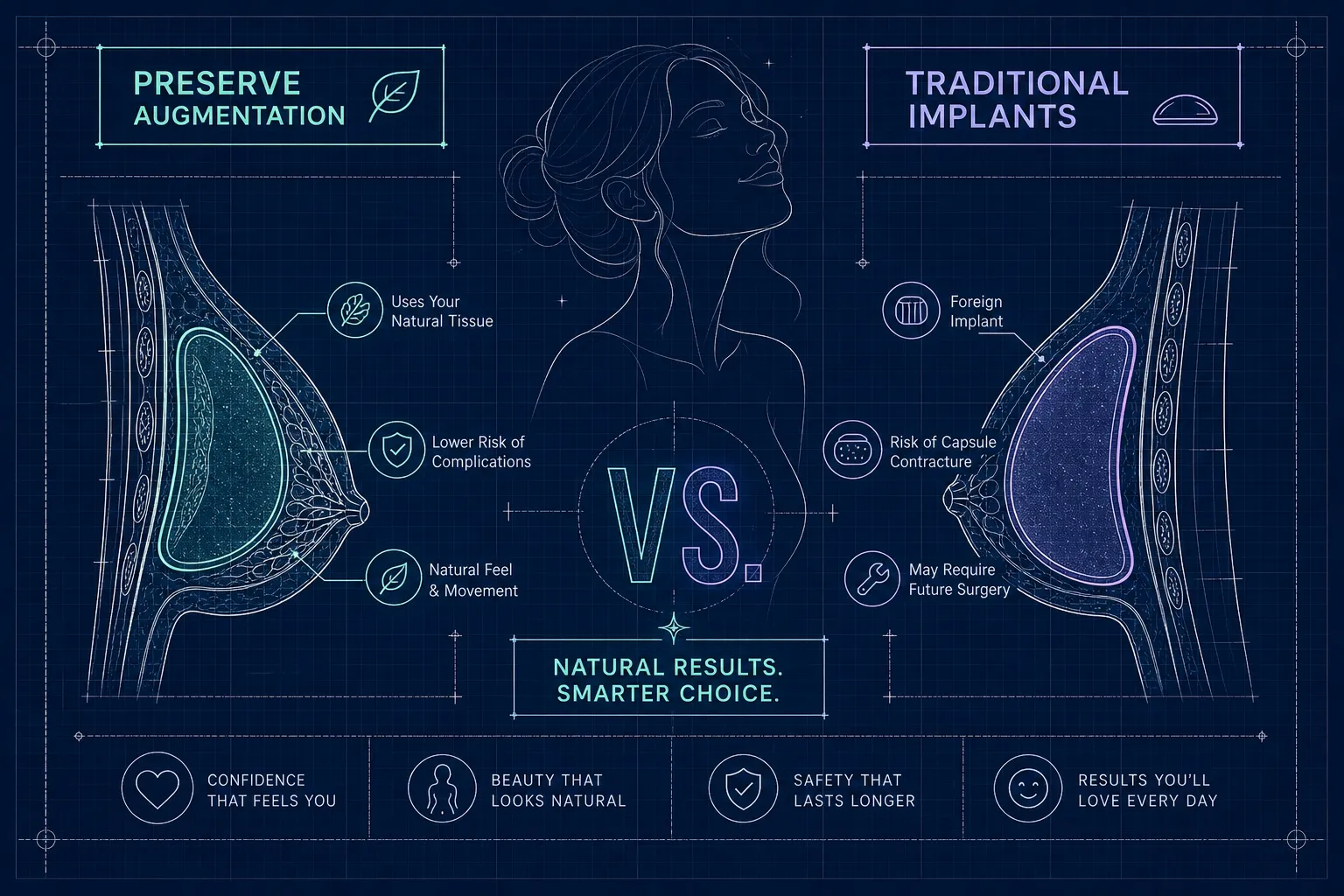
Preserve breast augmentation is a tissue-sparing approach that creates an implant pocket through stretching and displacement rather than cutting. It is distinct from traditional submuscular or subglandular augmentation in both its mechanics and its philosophy. Surgeons who lead with a natural aesthetics mindset find that the technique aligns closely with their clinical outlook, because it demands restraint: doing less to the tissue in order to achieve more convincing, longer-lasting results.
This article covers the mechanics of the Preservé technique, how it compares to conventional approaches, what the clinical evidence actually shows, and what recovery, costs, and candidacy look like in practice. It also outlines the questions worth raising before you book a consultation.
What preserve breast augmentation actually involves
How the Preservé technique creates an implant pocket
Preservé is a minimally invasive breast augmentation method that creates space for an implant without using electrocautery or sharp dissection. Two specialist instruments do the work: a Channel Separator, which uses a blunt, rotating tip to open a narrow tunnel behind the breast gland, and an Inflatable Balloon, which is inserted into that tunnel and slowly expanded to shape the pocket through controlled, radial tissue stretching. No ligaments are cut in the process. The circummammary ligaments that give the breast its natural contour and structural support remain entirely intact throughout.
This distinction matters more than it might initially appear. In conventional surgery, the pocket is cut open and the supporting architecture is permanently altered. With Preservé, the tissue is stretched and displaced, but its integrity is maintained. The stretched fibres retain their structural role, a plausible explanation, supported by the technique’s early complication data, for why outcomes look the way they do, though the precise biomechanical link between preserved ligamentous integrity and lower complication rates remains an active area of investigation.
Where the implant sits and why that placement matters
The implant is positioned in a supra-pectoral plane: above the pectoralis muscle, beneath the breast gland. This is sometimes referred to as subfascial or retro-glandular placement, and it stands in clear contrast to submuscular placement, where the pectoralis is elevated and partially detached. Because the muscle is left entirely untouched, preserve breast augmentation is frequently performed under light sedation or local anaesthesia with sedation rather than full general anaesthesia. For many patients, that alone is a meaningful practical difference from conventional surgery.
How it differs from traditional submuscular and subglandular approaches
Pocket creation: the fundamental technical distinction
Traditional augmentation relies on electrocautery or sharp dissection to create the implant pocket. With a submuscular approach, the pectoralis muscle itself is elevated and partially detached. With subglandular placement, the pocket sits above the muscle but the procedure still typically involves cutting supportive ligaments. Preservé avoids both, leaving the muscle and ligamentous architecture undisturbed. The incision is also notably smaller: typically 2.5 to 3 cm for Preservé, compared to 4 to 5 cm for most conventional approaches.
The practical implication is that operative trauma is significantly reduced. Less tissue is damaged, less bleeding occurs, and the structural support of the breast is preserved rather than rebuilt. Whether this translates to meaningfully better long-term outcomes depends on the individual patient, which is why consultation with a qualified surgeon remains essential.
Anaesthesia, recovery, and the honest size limitation
Because the pectoralis muscle is undisturbed, the post-operative tightness and spasm associated with submuscular placement is largely absent. This is what makes light-sedation augmentation feasible under the Preservé method and why patients are often discharged within a few hours. The experience is genuinely different from waking up after a submuscular procedure, where the sensation of the muscle readjusting can be uncomfortable for days.
The technique does carry a significant limitation, and it is worth stating plainly. Compatible implant sizes are restricted to the 150 to 315 cc range, using only the Motiva Ergonomix2 with SmoothSilk surface, as specified in Motiva’s procedural documentation for the Preservé system. Patients seeking a dramatic volume increase from a small natural base are unlikely to be candidates. This is a technique optimised for natural-feel breast implant results, not high-volume transformation.
What the clinical evidence shows about outcomes and risks
Complication rates in published follow-up data
Preservé-specific clinical cohorts, including published series such as Chacón-Quirós et al. (Aesthetic Surgery Journal, 2026), report a 0% rate of Grade III/IV capsular contracture and 0% permanent sensation loss, with an overall complication rate below 1% at 18 months. The same cohort data reports a 0% rate of inferior implant malposition (commonly called “bottoming out”) at three years. These are encouraging figures that reflect the tissue-preservation principle underpinning the technique, though readers should note that these are cohort series findings rather than results from randomised controlled trials.
Separately, surgeon-reported cohort data has indicated reductions in revision rates compared to conventional techniques; however, no randomised or controlled comparative trials yet exist, so any specific percentage should be understood as an observed cohort finding rather than a demonstrated causal reduction. The caveat applies more broadly: this evidence base is still relatively short-term. Multi-decade outcome data does not yet exist for preserve breast augmentation specifically, though the Motiva Ergonomix implant system has longer-term records from use in other surgical approaches. Patients making a long-term decision should understand they are working with three-year follow-up data, not twenty-year data.
The honest limitations around sensation and generalisation
The sensation preservation benefit, frequently cited in marketing material, requires some nuance. When conventional augmentation is performed via an inframammary incision, the risk of permanent sensation change is already low, around 5% or below. The Preservé advantage in sensation outcomes is most pronounced when compared to periareolar incision techniques, which carry roughly three times that risk. Choosing preserve breast augmentation over a well-executed inframammary conventional augmentation may not produce a meaningful difference in sensation outcomes specifically, though the overall tissue-sparing benefits remain real.
Preserve breast augmentation recovery: what to expect week by week
The first two weeks after a tissue-preserving augmentation
Days one to three typically involve mild to moderate discomfort, manageable with prescribed medication initially and over-the-counter pain relief by day three or four. Most patients in desk-based roles return to light work within two to five days. Arm movement above shoulder height is restricted during the first week, and driving should be avoided until comfort and reflexes have clearly returned. The breasts will sit higher and feel firmer initially; this is normal and expected as the tissue settles around the implant.
Swelling and tightness are part of the process, not complications. Patients who understand this in advance tend to manage the early recovery more comfortably than those expecting to feel entirely normal within 48 hours. The two-week mark is when most people notice a significant improvement in how the breasts look and feel, though the final result is still weeks away.
Returning to exercise and the longer arc of healing
Gentle walking is encouraged within 24 to 48 hours. Low-impact cardio such as stationary cycling or yoga can typically resume around weeks two to four. For strenuous or chest-focused exercise, the commonly cited timeframe is four to six weeks, though some surgeons recommend waiting eight to twelve weeks depending on individual healing and their clinical assessment. Following your surgeon’s specific guidance is essential, as blanket timelines cannot account for individual variation. Scar maturation continues for up to 18 months, with the incision site gradually fading. The final implant position and breast shape typically stabilise between three and six months, once residual swelling has resolved and the tissue has fully adapted around the Motiva Ergonomix implant.
Preserve breast augmentation costs in the UK in 2026
What to expect from a comprehensive package
In the UK, preserve breast augmentation currently ranges from approximately £7,500 to £12,500 (based on clinic pricing surveyed in 2026), with most London and major-city clinics quoting comprehensive packages of £8,500 to £9,500. A well-structured package covers surgeon and anaesthetist fees, facility costs, the Motiva Ergonomix2 implant with manufacturer warranty, and follow-up appointments. Preservé typically costs 15 to 20% more than standard silicone augmentation, reflecting the specialist instruments, certified surgeon training, and premium implant specification.
Patients should be wary of quotes that do not itemise what is included. A price that excludes the anaesthetist fee, follow-up appointments, or the implant warranty is not a comprehensive package, regardless of how it is described. Ask for a line-by-line breakdown before comparing quotes across clinics.
Who is and is not a suitable candidate
Only the Motiva Ergonomix2 with SmoothSilk surface is compatible with the Preservé technique, available in Mini, Demi, and Full projection profiles within the 150 to 315 cc range, as detailed in Motiva’s technical guidance. The candidates best suited to this approach are those seeking a modest, natural-looking enhancement who have some existing breast tissue for the technique to recruit and reposition. The implant is positioned in the upper inner quadrant precisely to lift and draw in native tissue, creating a natural slope without relying on volume alone.
Patients wanting a significant volume increase, those with very little breast tissue, or those with specific anatomical considerations will likely be better served by a different approach. The surgeon’s assessment at consultation is the only reliable way to determine suitability, and any clinic that confirms candidacy without a thorough physical assessment should raise questions.
Questions to ask your surgeon before booking
What to assess beyond Motiva certification
Preservé requires specific surgeon training and accreditation from Motiva, but certification alone does not tell the full clinical story. Ask how many Preservé procedures the surgeon has performed and what their personal complication rate has been, not the manufacturer’s published data. Ask to see before-and-after photographs specifically from their Preservé cases, not from their general augmentation portfolio. Ask what happens if a revision becomes necessary, whether the implant warranty is registered in your name, and how post-operative follow-ups are structured.
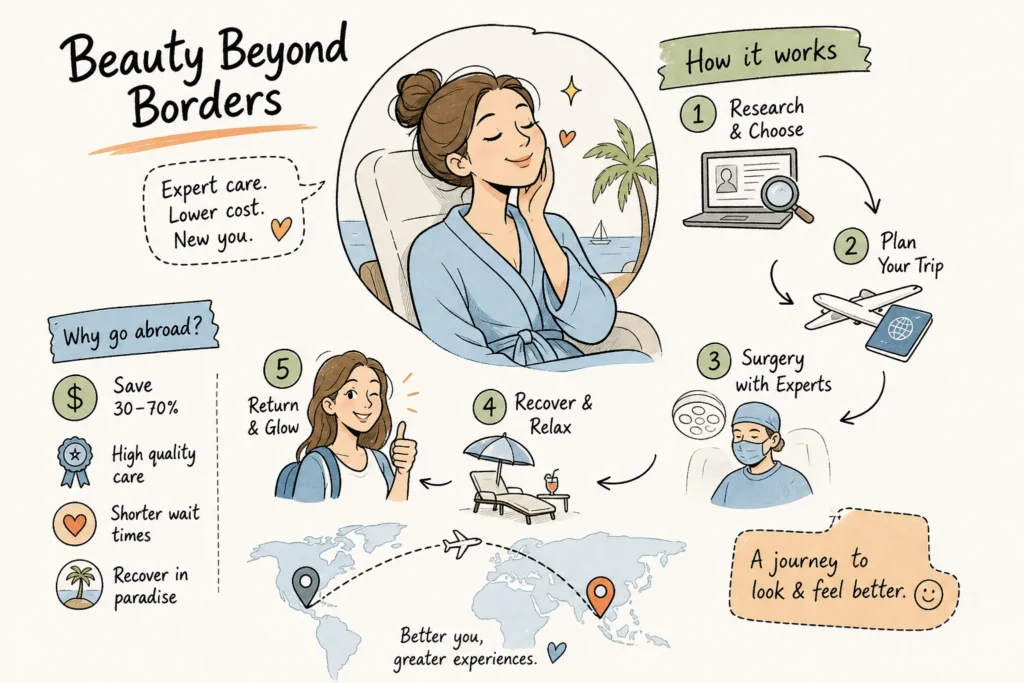
For patients travelling internationally for their procedure, the follow-up question is particularly important. Understanding what remote aftercare looks like, who to contact if concerns arise after returning home, and whether virtual consultations are available for ongoing support are all practical questions that a well-organised clinic should be able to answer clearly.
Why surgical philosophy matters as much as technical skill
Preserve breast augmentation is a technique built on restraint. It achieves results by doing less to the tissue, not more. This demands a surgeon whose clinical instincts align with that philosophy, one who values harmonious proportions and tissue integrity over dramatic transformation. A surgeon who leads with volume and spectacle is not naturally aligned with what this approach requires, regardless of their Motiva certification status.
Surgeons with this profile combine academic rigour with a proportionality-first approach to breast surgery. Prof. Dr. Ufuk Bilkay, whose clinical philosophy centres on results that respect and enhance a patient’s existing anatomy rather than overwriting it, is one such example. His background includes Emory University fellowship training and a published academic record in aesthetic and reconstructive surgery, and his approach to breast surgery is grounded in the same evidence-based, tissue-respecting principles that advanced preservation techniques require. Whether a patient consults at his clinic in Izmir or with a certified surgeon closer to home, the questions they ask should probe how their surgeon thinks about outcomes, not only how they execute a procedure.
Making an informed decision
The Preservé technique uses specialist instruments to create an implant pocket without cutting tissue or disturbing the pectoralis muscle. Early clinical data reports a 0% capsular contracture rate and 0% permanent sensation loss at 18 months, with recovery typically allowing a return to desk work within two to five days and strenuous exercise from four to six weeks onwards, subject to surgical guidance. The technique suits patients seeking modest, natural-feel results in the 150 to 315 cc range and is not designed for high-volume augmentation. UK pricing sits between £7,500 and £12,500 for a comprehensive package in 2026.
If preserve breast augmentation sounds aligned with your goals, the right next step is a detailed consultation with a certified surgeon who can assess your anatomy and expectations in full. The right surgeon combines Motiva Preservé certification with a genuine commitment to natural, tissue-respecting outcomes, a combination that should be evident not just in their credentials, but in how they approach the conversation from the very first appointment. Practices such as Prof. Dr. Bilkay’s in Izmir, where enhancing rather than altering is built into every clinical decision, offer a useful benchmark for what that kind of consultation should feel like.
Book a Consultation
It’s easy and free!